Why Is My Microwave Not Heating? Common Causes and How to Fix It
Microwave ovens are an essential appliance in every kitchen, providing a fast and convenient way to reheat meals, defrost frozen foods, or cook simple dishes. But what happens when your microwave stops heating? If you’ve found yourself asking, Why is my microwave not heating? or Why is the microwave not heating up?, you know how frustrating this issue can be.
At Blueb Services, we frequently get calls from homeowners in Fort Lauderdale, Miami, Pembroke Pines, Hialeah, and surrounding South Florida areas about microwaves that won’t heat. In this guide, we’ll explore the common causes, how to troubleshoot minor problems, and when to call a professional technician.Read More: Is Your Oven Making Weird Noises? Here’s What’s Causing It
Common Reasons Your Microwave Is Not Heating
Microwaves rely on several components to generate heat. When one of these fails, your microwave may run but not heat your food. Here are the most common culprits:
1. Faulty Magnetron
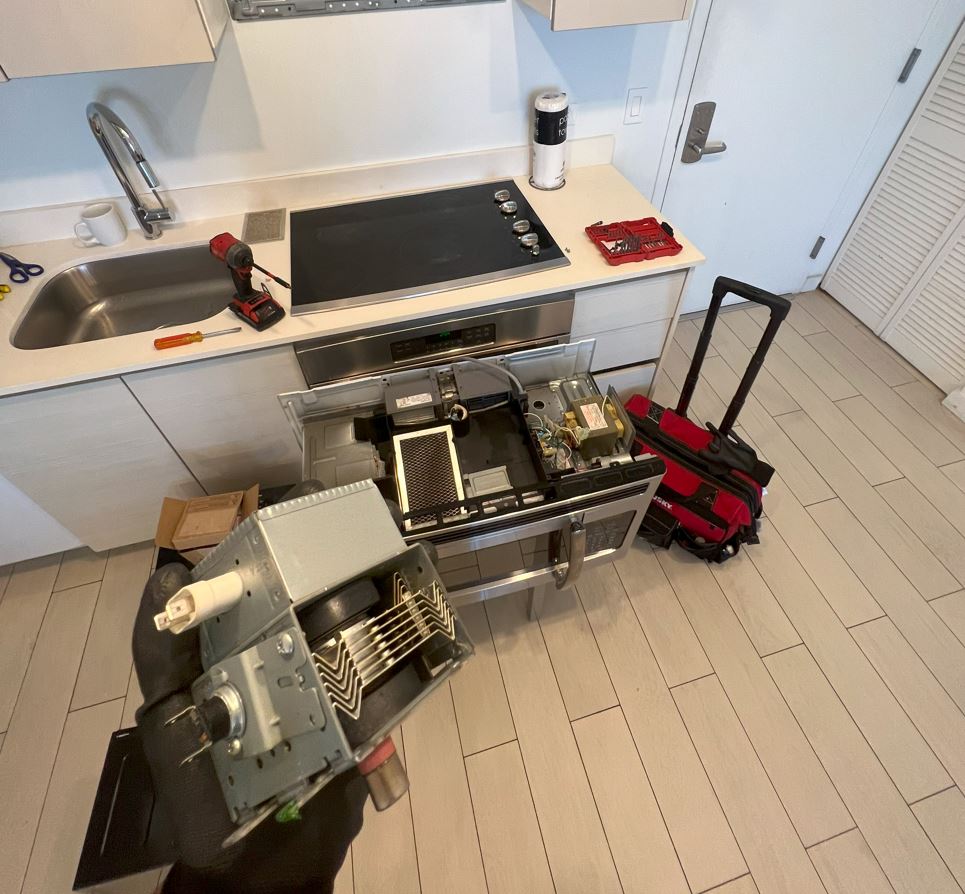
The magnetron is the heart of your microwave. It produces the microwaves that heat your food. If the magnetron is faulty or burned out, your microwave may turn on, the light may work, and the turntable may spin—but it won’t heat anything.
- Symptoms: Microwave runs, light is on, no heat.
- Estimated frequency: About 30% of microwave heating issues.
Solution: Replacing a magnetron is not a DIY task due to high-voltage risks. A professional technician from Blueb Services can safely diagnose and replace it.
2. Broken Door Switch
Microwave door switches are safety devices that prevent the microwave from operating when the door is open. If a switch is broken, the microwave may run but not heat.
- Symptoms: Microwave runs normally, but no heating occurs.
- Estimated frequency: 20% of microwave heating issues.
Solution: A certified technician can test each door switch and replace any defective ones.
3. Damaged High-Voltage Capacitor
The high-voltage capacitor stores electricity that powers the magnetron. If the capacitor is damaged, your microwave will fail to heat.
- Symptoms: Microwave may hum, but food remains cold.
- Estimated frequency: 10% of heating problems.
Solution: Handling a capacitor can be dangerous because it stores lethal voltage. Only trained professionals should replace it.
4. Faulty Transformer
The transformer increases household voltage to the high voltage needed by the magnetron. A failed transformer prevents the magnetron from generating heat.
- Symptoms: Microwave lights up but produces no heat.
- Estimated frequency: 5% of microwave heating issues.
Solution: Transformer replacement is complex and should only be performed by licensed technicians.
5. Burnt Fuse
Fuses protect your microwave from electrical surges. A blown fuse may allow the microwave to power on but prevent heating.
- Symptoms: Microwave powers up partially but doesn’t heat.
- Estimated frequency: 15% of microwave heating problems.
Solution: Fuse replacement is a relatively straightforward repair for a professional.
6. Control Board or Touchpad Malfunction
Modern microwaves rely on control boards to manage all functions. If the control board or touchpad fails, the microwave may run without generating heat.
- Symptoms: Buttons may not respond or work intermittently, microwave won’t heat.
- Estimated frequency: 10% of heating issues.
Solution: Diagnosing control board problems requires professional testing, and replacement is often necessary.
How to Diagnose Your Microwave Not Heating
Before calling a technician, you can perform a few basic checks to narrow down the problem:
- Check the power source: Ensure your microwave is properly plugged in and that the circuit breaker hasn’t tripped.
- Inspect the door: Look for damage or misalignment. A faulty door latch can prevent heating.
- Test simple cooking functions: Sometimes only specific functions fail. Note which settings do not heat.
- Listen for unusual sounds: Humming, buzzing, or clicking can help identify electrical component failures.
⚠️ Important: Do not attempt to repair high-voltage components like the magnetron, capacitor, or transformer yourself. These parts can be extremely dangerous.
DIY Fixes for Minor Microwave Heating Problems
While many microwave issues require professional repair, some minor problems can be addressed safely:
- Reset the microwave: Unplug for 10–15 minutes and then plug back in to reset the electronics.
- Clean the door and seals: Ensure the door latch and seals are free from food debris or grease.
- Check fuses: Only replace accessible, low-voltage fuses if you are confident and unplug the microwave first.
If these steps don’t resolve the issue, it’s time to contact Blueb Services.Read More: Oven Not Heating Up? Gas & Electric Oven Troubleshooting Guide
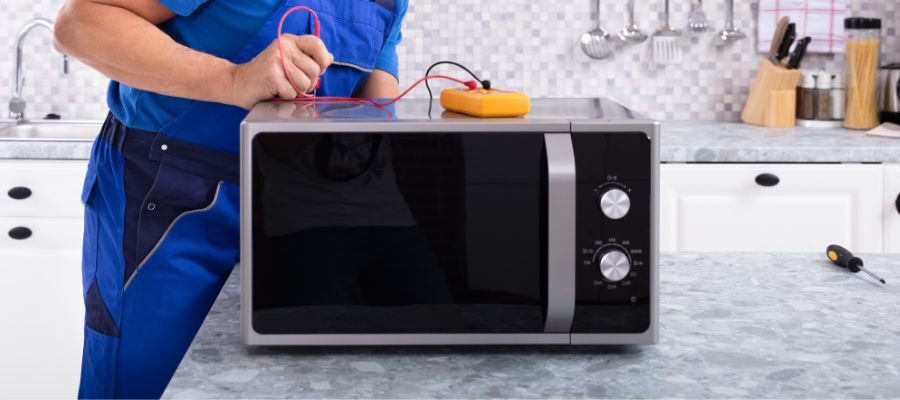
Why Call a Professional Microwave Repair Service
Microwave repair involves high-voltage components that can be hazardous if handled incorrectly. Here’s why calling a professional is the safest choice:
- Accurate Diagnosis: Technicians can quickly identify whether the magnetron, capacitor, transformer, or control board is failing.
- Safety First: Professionals have the training to work with high-voltage appliances safely.
- Fast and Reliable: Avoid wasting time and money on trial-and-error repairs.
- Warranty on Repairs: Blueb Services backs its repairs with a workmanship warranty for peace of mind.
Our certified technicians provide same-day service in Fort Lauderdale, Miami, Pembroke Pines, Hialeah, and surrounding areas, ensuring your microwave is up and running quickly.
Preventing Microwave Heating Issues
Regular maintenance and proper use can extend your microwave’s lifespan:
- Avoid running the microwave empty.
- Keep the interior clean and free of spills.
- Do not use metal or foil inside the microwave.
- Ensure proper ventilation around the appliance.
- Schedule routine appliance inspections with professional technicians.
Conclusion
A microwave that isn’t heating can disrupt your daily routine, spoil food, and leave you frustrated. Common causes include a faulty magnetron, damaged door switches, blown fuses, or issues with the control board. While minor issues may be fixed with simple troubleshooting, many problems require the expertise of a professional technician.
In South Florida, Blueb Services provides fast, reliable microwave repair for homeowners in Fort Lauderdale, Miami, Pembroke Pines, Hialeah, and nearby areas. Our certified technicians handle all major brands and models, safely repair high-voltage components, and ensure your microwave works like new. Don’t let a microwave that isn’t heating slow you down—contact Blueb Services today.
FAQs: Microwave Not Heating
Q1: Why is my microwave not heating?
A: Common reasons include a faulty magnetron, blown fuse, defective door switch, high-voltage capacitor failure, or control board issues.
Q2: How do I fix a microwave that is not heating?
A: Some minor fixes include resetting the microwave, cleaning the door and seals, and replacing accessible fuses. High-voltage repairs should be done by a professional.
Q3: Can Blueb Services repair all microwave brands?
A: Yes. Our certified technicians service all major brands and models in Fort Lauderdale, Miami, Pembroke Pines, Hialeah, and surrounding areas.
Q4: Is it safe to try repairing the magnetron or capacitor myself?
A: No. These components store lethal voltages. Professional repair is required for safety.
Q5: How long does a typical microwave repair take?
A: Most microwave repairs can be completed in a few hours, depending on the issue. Same-day service is often available.
Q6: Do you offer a warranty on microwave repairs?
A: Yes. All repairs by Blueb Services come with a workmanship warranty for peace of mind.
Q7: Why is my microwave running but not heating?
A: This usually indicates a problem with the magnetron, door switch, or high-voltage components. A certified technician can diagnose the issue quickly.