Samsung Dryer Not Heating? Common Causes and Next Steps

A Samsung dryer not heating can complete an entire cycle while leaving your clothes damp and cold. In some cases, the problem is related to the selected settings or restricted airflow. In others, an internal component such as the heating element, thermal fuse, thermostat, or moisture sensor may need to be inspected.
Before replacing parts or assuming you need a new dryer, start with a few basic checks. The exact cause depends on the model, whether the dryer is electric or gas, and what happens during the cycle.
This guide explains the most common reasons a Samsung dryer may stop producing heat, what you can safely inspect, and when it is time to contact a professional technician.
Why Is My Samsung Dryer Running but Not Heating?
When the drum turns but the dryer does not get hot, it usually means the appliance can start a cycle but something is preventing it from generating or maintaining heat.
Possible causes include:
- An incorrect dryer setting
- Restricted airflow
- A clogged lint filter
- A blocked dryer vent
- An overloaded drum
- An electrical supply problem
- A damaged heating element
- A blown thermal fuse
- A thermostat or temperature sensor issue
- A gas supply or igniter problem in gas models
- A control board or wiring problem
The symptoms may look similar even when the causes are different. A professional diagnosis can help determine which component is actually responsible before any parts are replaced.
Check the Dryer Settings First
Before inspecting the dryer for a mechanical problem, confirm that the selected cycle is designed to produce heat.
Some Samsung dryers include settings such as:
- Air Fluff
- Air Dry
- Wrinkle Prevent
- Eco modes
- Delicate cycles
- Sensor Dry settings
Air-only settings tumble clothes without producing heat. Some energy-saving or delicate cycles may also use lower temperatures than expected.
Try running a timed dry cycle with a normal heat setting and a small load. If the dryer begins heating, the previous cycle selection may have been the issue.
If the dryer still runs without producing heat, continue with the next checks
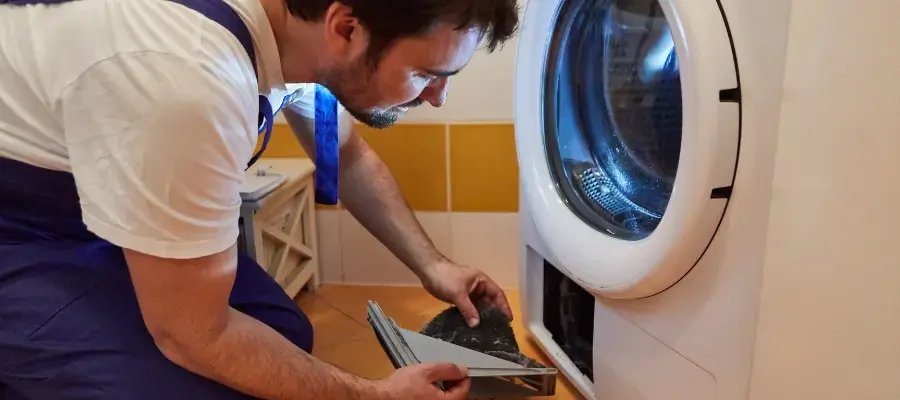
Inspect and Clean the Lint Filter
A clogged lint filter can restrict airflow through the dryer. When air cannot move properly, the dryer may take longer to dry clothes, overheat, or activate a safety component that interrupts the heating process.
Remove the lint filter and clear away any visible buildup.
The filter should normally be cleaned before or after every load. If fabric softener residue has collected on the screen, airflow may remain restricted even when the filter appears clean.
You can test the screen by running a small amount of water over it. If the water collects instead of passing through, the filter may need a more thorough cleaning according to the manufacturer’s instructions.
Never operate the dryer without the lint filter installed.
Check for Restricted Dryer Vent Airflow
A blocked or restricted dryer vent is one of the most important problems to rule out when a Samsung dryer is not getting hot or takes too long to dry clothes.
Lint can accumulate inside:
- The exhaust hose
- The wall duct
- The exterior vent opening
- Bent or compressed sections of ductwork
Restricted airflow can cause long drying times, excess heat inside the appliance, or repeated thermal fuse failures.
While the dryer is running, check whether air is coming out of the exterior vent. Weak airflow may indicate a blockage.
Do not continue operating the dryer if you notice:
- A burning smell
- Excessive heat around the appliance
- Smoke
- Sparks
- Damaged wiring
- A vent that appears severely blocked
Turn off the dryer and contact a qualified professional when there are signs of an electrical or fire-related hazard.
Make Sure the Dryer Is Not Overloaded
A dryer needs enough space for clothes to tumble and for warm air to circulate throughout the drum.
A large or tightly packed load may remain damp even when the dryer is producing some heat. Heavy items such as towels, blankets, or bedding can also take longer to dry.
Remove some of the clothing and test the dryer with a smaller load.
If the smaller load dries normally, the previous load may have been too large or unevenly distributed.
If the dryer remains cold throughout the cycle, the problem is likely not caused by overloading alone.
Confirm the Dryer Is Receiving the Correct Power
An electric Samsung dryer may turn on and rotate even when it is not receiving the complete electrical supply required to produce heat.
Electric dryers typically require more power for the heating system than they do for the motor and control panel. This means the appliance may appear to work while the heating circuit does not.
Check the home’s electrical panel for a tripped breaker. Some dryer circuits use two connected breakers, and one side may trip while the dryer continues to run.
Resetting a breaker may restore operation, but repeated tripping can indicate an electrical problem that requires professional attention.
Do not open the dryer, electrical outlet, or internal wiring unless you are properly trained.
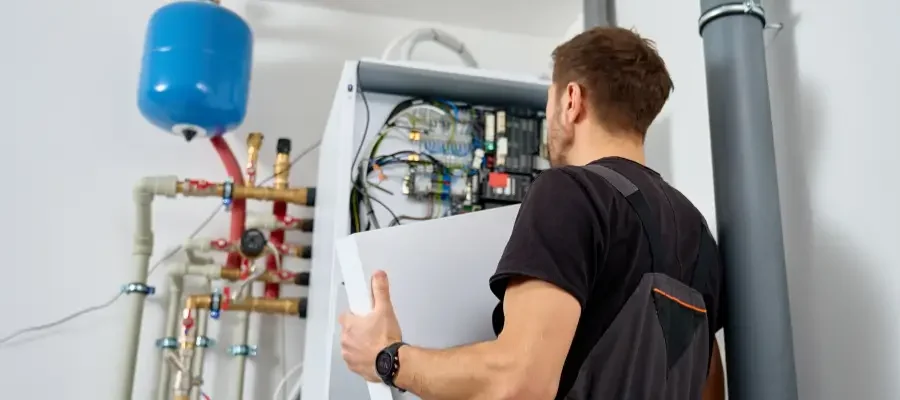
Could the Samsung Dryer Heating Element Be Damaged?
The heating element is responsible for generating heat in many electric dryers.
Over time, the element can wear out, break, or develop a damaged connection.
Possible signs of a heating element problem include:
- The dryer runs but produces no heat.
- Clothes remain damp after a complete cycle.
- Drying times gradually become longer.
- The dryer heats inconsistently.
- The appliance stops heating after previously overheating.
A damaged heating element cannot be confirmed through appearance or symptoms
alone. Other components can produce similar problems.
The dryer should be disconnected from power and properly tested before replacing
the element.
What Does the Thermal Fuse Do?
The thermal fuse is a safety component designed to protect the dryer when
temperatures become too high.
If the dryer overheats, the fuse may interrupt part of the appliance’s operation.
Depending on the model, a blown thermal fuse may prevent heating, starting, or
continued operation.
A thermal fuse can fail because of:
- A clogged vent.
- Restricted airflow.
- Lint buildup.
- A damaged thermostat.
- Excessive internal temperature.
- Another heating-system problem.
Replacing the fuse without correcting the reason it failed may cause the same
problem to happen again.
A technician can test the fuse and inspect the airflow system to identify what
may have caused the dryer to overheat.
Watch a Samsung Dryer Heating Repair
In this Blueb Services video, you can see an example of how a Samsung dryer
heating problem was inspected and repaired.
The video demonstrates one possible repair, but the exact cause may vary
depending on the dryer model and symptoms. A heating element should not be
replaced until the dryer has been properly diagnosed.
Samsung Gas Dryer Not Heating
A Samsung gas dryer uses a different heating system than an electric dryer.
A gas model that runs without heating may have a problem related to:
- The household gas supply.
- A closed gas valve.
- The igniter.
- Gas valve coils.
- A flame sensor.
- A thermostat.
- The thermal fuse.
- Restricted airflow.
Do not attempt to repair a gas line, valve, or internal gas component yourself.
If you smell gas:
- Stop using the dryer.
- Do not turn electrical switches on or off.
- Leave the area.
- Contact the gas provider or emergency services as appropriate.
A qualified technician should inspect gas dryer heating problems.
Could the Moisture Sensor Be Causing the Problem?
Samsung dryers with Sensor Dry use moisture sensors to estimate when clothes are
dry.
Residue from fabric-softener sheets can sometimes collect on the sensor bars and
interfere with their readings. This may cause the cycle to end too early or
behave unexpectedly.
However, a dirty moisture sensor does not always mean the dryer has completely
lost heat.
If the dryer heats during a timed cycle but not during a sensor cycle, the sensor
settings or sensor bars may need attention.
Clean only the accessible sensor surface according to the manufacturer’s
instructions. Do not disassemble internal components.
When Should You Schedule Samsung Dryer Repair?
Consider requesting professional dryer service when:
- The drum turns but the dryer remains completely cold.
- The dryer heats inconsistently.
- Clothes remain damp after multiple cycles.
- The breaker repeatedly trips.
- The dryer displays an error code.
- The appliance stops during the cycle.
- The dryer produces a burning smell.
- You hear unusual electrical or mechanical sounds.
- The vent has been cleaned but the problem continues.
- The heating element or thermal fuse needs to be tested.
- The dryer requires internal electrical or gas work.
Continuing to use a dryer with an unresolved heating or airflow problem may
create additional damage or a safety risk.
A technician can inspect the appliance, identify the source of the problem, and
explain whether repairing or replacing the affected component makes sense.
Is It Worth Repairing a Samsung Dryer That Is Not Heating?
Whether the dryer is worth repairing depends on several factors:
- The age of the appliance.
- Its general condition.
- The exact component that failed.
- The cost and availability of the part.
- Whether the dryer has had repeated problems.
- The condition of the vent and electrical supply.
- The cost of a comparable replacement.
A failed heating element, fuse, sensor, or thermostat does not automatically
mean the entire dryer needs to be replaced.
A clear diagnosis can help you compare the repair with the cost of purchasing
and installing another appliance.
Samsung Dryer Repair in South Florida
Blueb Services provides professional dryer repair in selected areas of Broward
County and Miami-Dade County.
When contacting Blueb Services, it is helpful to provide:
- The Samsung dryer model number.
- Whether the dryer is electric or gas.
- A description of what happens during the cycle.
- Any error code shown on the display.
- Whether the drum turns.
- Whether the dryer produces any heat.
- Your service location.
This information can help the team better understand the problem before the
appointment.
Learn more about our dryer repair services in South Florida. You can also review the
areas served by Blueb Services.
Frequently Asked Questions
Why Is My Samsung Dryer Running but Not Getting Hot?
The dryer may not be getting hot because of the selected cycle, restricted
airflow, an electrical-supply issue, a damaged heating element, a blown thermal
fuse, or another internal component. The exact cause requires inspection and
testing.
Can a Clogged Dryer Vent Stop the Dryer From Heating?
Restricted airflow can cause overheating, long drying times, and safety
components to activate. A blocked vent should be addressed before replacing
internal dryer parts.
Does a Samsung Dryer Have a Reset Button?
Many Samsung dryers do not have a dedicated reset button. A basic power reset
may involve turning off the dryer or disconnecting power for a short period, but
this will not repair a damaged component. Follow the instructions for your
specific model.
Why Does My Samsung Dryer Heat Sometimes but Not Always?
Intermittent heat could be related to airflow, a failing heating component, a
thermostat, a sensor, a connection, or the selected cycle. A technician can test
the dryer under operating conditions to identify the problem.
Can I Replace the Samsung Dryer Heating Element Myself?
Replacing a heating element requires disconnecting power, opening the appliance,
accessing internal components, and confirming the original cause of the failure.
Because the dryer contains high-voltage components, professional service is
recommended unless you have appropriate training.
How Do I Know Whether the Thermal Fuse Is Blown?
A thermal fuse normally needs to be tested with the dryer disconnected from
power. The symptoms alone are not enough to confirm that the fuse has failed.
Should I Stop Using a Dryer That Is Not Heating?
A dryer that produces no heat is not always immediately dangerous, but you
should stop using it if you notice a burning smell, smoke, sparks, exposed
wiring, excessive heat, a gas odor, or repeated breaker trips.
Get Help With Your Samsung Dryer
A Samsung dryer that runs without heating may have a simple airflow issue or a
component that requires professional testing.
Start by checking the cycle settings, lint filter, load size, breaker, and
visible vent airflow. If the dryer remains cold or shows signs of an internal
problem, Blueb Services can help identify the cause and recommend the next step.